

6 Tips for a High-End Home Renovation (With Less Stress)
A high-end renovation is exciting — truly. It's the moment you get to rethink how your home looks, feels, and functions. But the number of details can be staggering. And there are so many moving parts: designers, architects, contractors, timelines, selections, budgets — even before anyone swings a hammer. The good news? When it's planned properly, a renovation doesn't have to feel overwhelming. In fact, it can feel surprisingly fun and organized.
With 24 years of experience working in the Boston area, I've come up with 6 sure-fire ways to set up your reno for success. And here's what you need to know upfront: You don't get any BS with me, just a designer with a wealth of experience, the skill set to solve problems as they arise, and honesty. It's a rare trait these days.
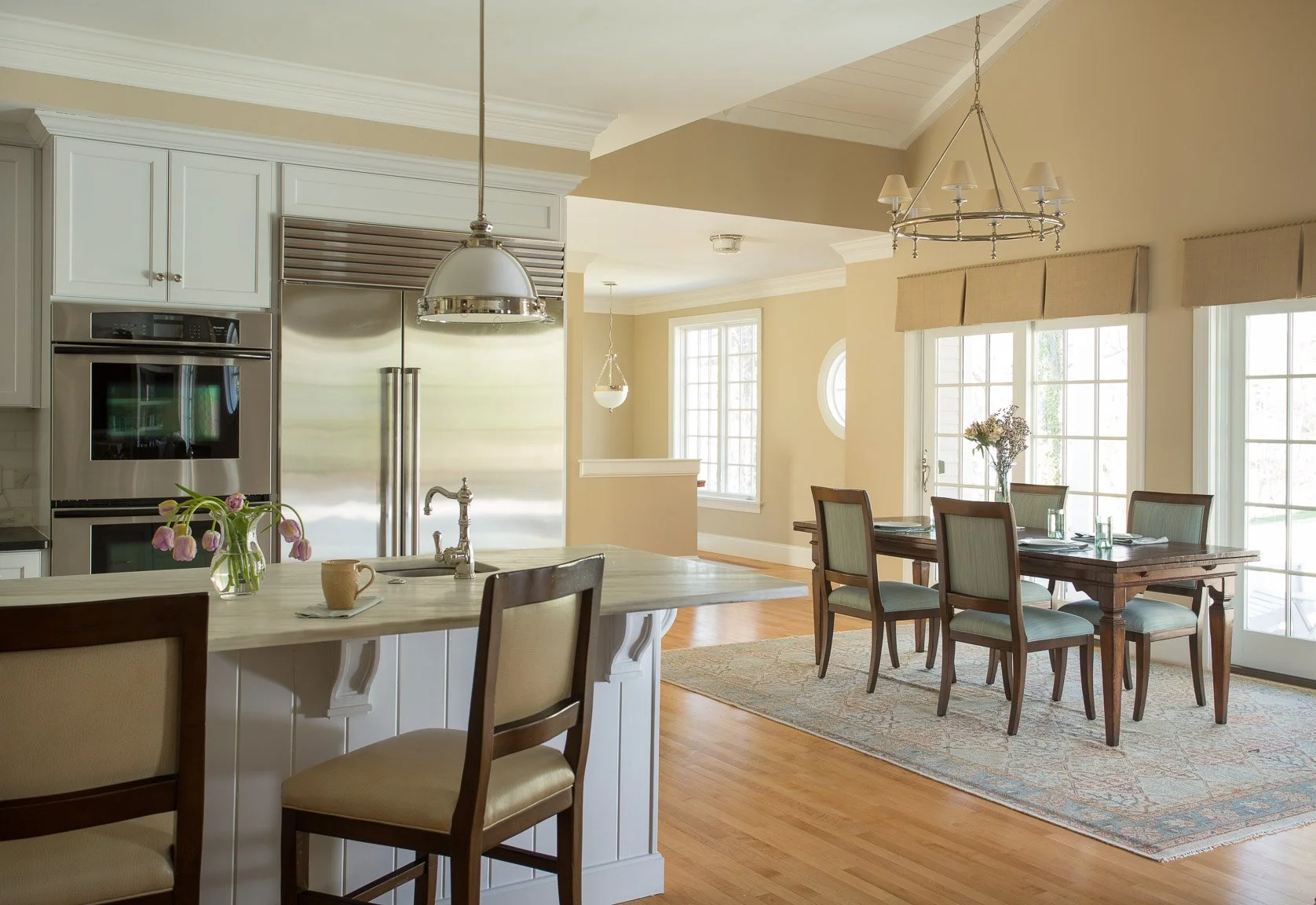
Bright and airy high-end Newton addition including a kitchen renovation designed by AbbeyK
1. Start with How You Live
Before you select a tile or choose a paint color, or even consider which appliances you like, think about how you live now and how long you will stay in the house. What might your life be like in the near future? 10 years? 20 if it applies? When we start a renovation project with our clients, we think about these questions and more!
How do you use your kitchen?
Do you cook most nights?
Are there kids?
Is aging-in-place something you are living with or planning for?
Might family members live with you in the future?
Do you entertain?
How do you use the primary bath(s)? Is the bathroom shared? How much privacy do you like?
Do you work at home?
Any special needs?
The best design begins with understanding your lifestyle. Because a home, when designed right, should add to your life and be in service of how you live. It should work quietly in the background and make you feel good. Your life. Not someone else's.
I recently worked with clients who were out of space but didn't want to move. They love their neighborhood. We rearranged the flow of the house, converted two sunrooms — one into an office and mudroom, the other into a play/study space for the kids. We added a new primary bath and storage throughout. Now it's a home that works for them, and they get to stay in the neighborhood they love.
2. Build the Right Team Early
For a luxury renovation, the order matters. You want your interior designer involved from the very beginning. Sometimes I am brought in towards the end. That can lead to key details being overlooked.
As a designer, we set the vision, check the layout and flow, and make early decisions that affect the architecture, plumbing, electrical, cabinetry, and well, everything. When the designer is on board from the beginning, features won't be missed that have to be rethought later. It actually can save you money. The contractor can build from a clear, coherent plan — not guesswork. It saves time. It avoids rework, and it avoids costly mistakes and keeps the budget in check. I won't show you things that are outside of your budget. Also it gives consideration for how you will live in your space.
Some architects are good with furniture placement and kitchen and bath design and some have strengths in other areas. Most excel in areas of their training and strengths, such as roof lines, staircases, how to keep the house upright and the systems working.
3. Expect to Make Hundreds of Decisions — Let Us Streamline Them
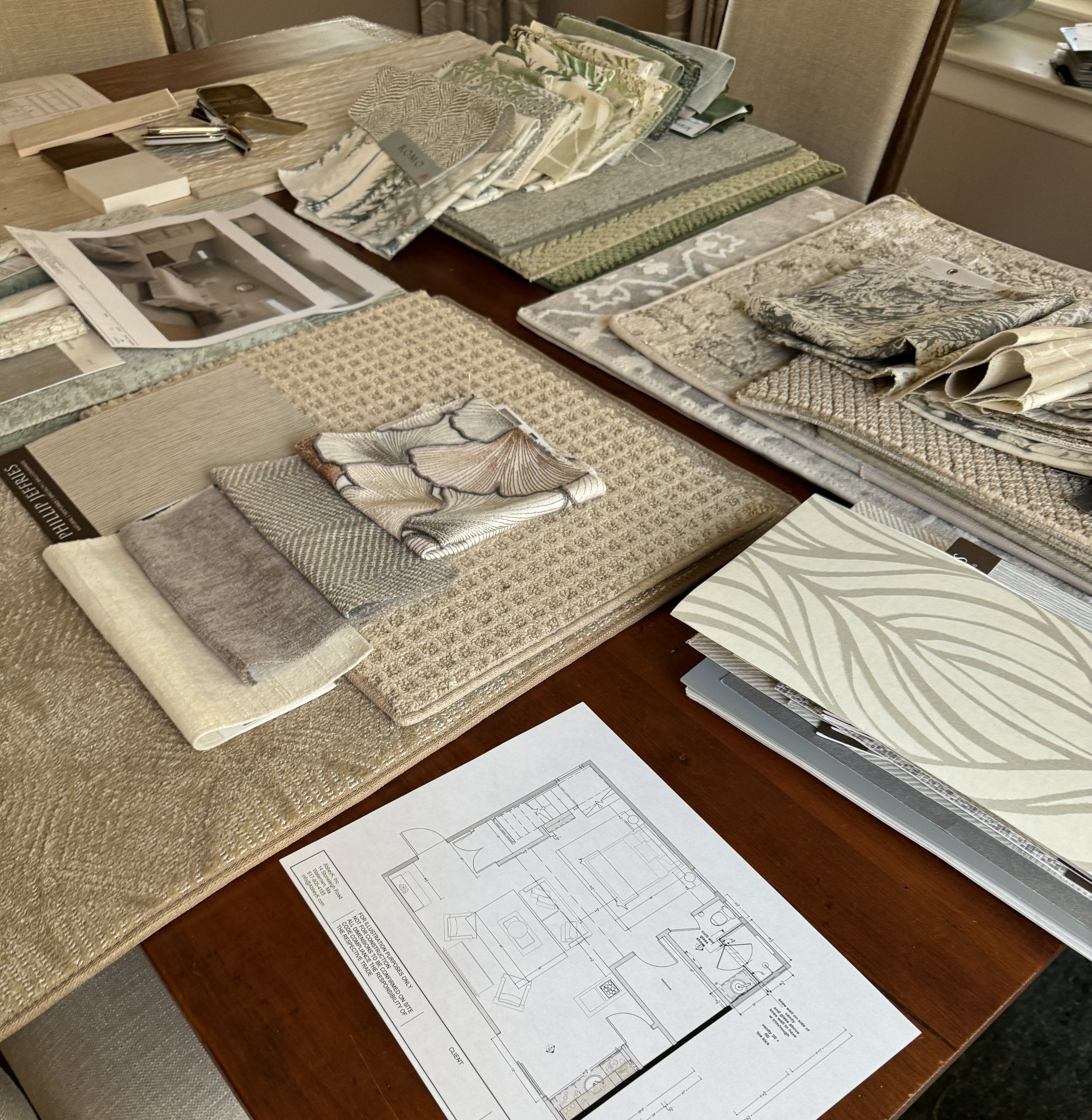
Layout before a presentation for a basement on-suite renovation with living area, bathroom, bedroom, built-ins, and kitchenette. On the table are piles of carpets, fabric, tiles, hardware samples, wallpaper, wood finishes, flooring, plans and 3-Ds.
Even the simplest renovation has too many micro-decisions to count: tile layout, grout color, trim profiles, cabinet hardware, lighting placement. It goes on and on. AND ON.
My job is to edit the world of minutiae for you while keeping the big picture in mind at all times. We want to remember the context and not get lost in the weeds. I bring a curated selection that fits the look and feel we're creating, so you're never drowning in options. You get the beautiful, high-end result without overload.
If you're feeling overwhelmed just reading this list, that's exactly why I'm here.
4. Build a Realistic Budget (With Breathing Room)
Good planning means setting a budget that reflects the quality you want. Materials, custom cabinetry, appliances, lighting, flooring — they add up. Contractor labor has a real cost, too. And in the Boston area, prices vary widely by town, home's time period, and scope. And whether there's parking or not.
Working in the Boston area for 24 years means I know which contractors are reliable, which suppliers have the best lead times, and how to navigate local permitting. This knowledge saves you time, money, and headaches.
Here's the secret: The clients who are happiest build a budget with some flexibility. Not because things go wrong, which they do, but because sometimes they decide to break their own budget. Perhaps they see a tile they absolutely love, or decide to upgrade quality on appliances. Perhaps it's a heated floor — these options (and more) can elevate your home and can be worth it over time. How much is it worth to you to love something versus thinking it's OK? These are very personal decisions. And I help my clients think these through.
5. Phase the Project for a Smoother Experience
If you're renovating multiple spaces, often doing it all at once makes the most sense. Other times, phasing the work keeps your home functional and your life manageable. Either way, careful planning minimizes disruption and keeps the project moving. A master plan and then breaking it into steps can be a helpful consideration.
Here's what to expect timeline-wise: A typical bathroom renovation starts at 3 months these days, and a kitchen can easily take 4-6 months. When you have a large renovation or addition, it can extend into years. But with the right planning and team, even longer projects stay organized and on track.
6. Trust the Process Because Renovations can feel messy (literally).
Because renovations can feel messy (literally). Walls come down. Floors get covered. Tools appear everywhere. There's dust. Oh the dust.
The best thing you can do is trust the team you've chosen. You hired experts — let us do the work. Let us guide you. When a renovation is thoughtfully planned from day one, the outcome is nothing short of transformative.
Ready to Start Your Renovation?
When we first meet, we'll walk through your home together and talk about your vision. From there, I'll create a proposal outlining the scope, timeline, and investment.
Let's talk about how we can make your vision a reality — with less stress and more excitement.
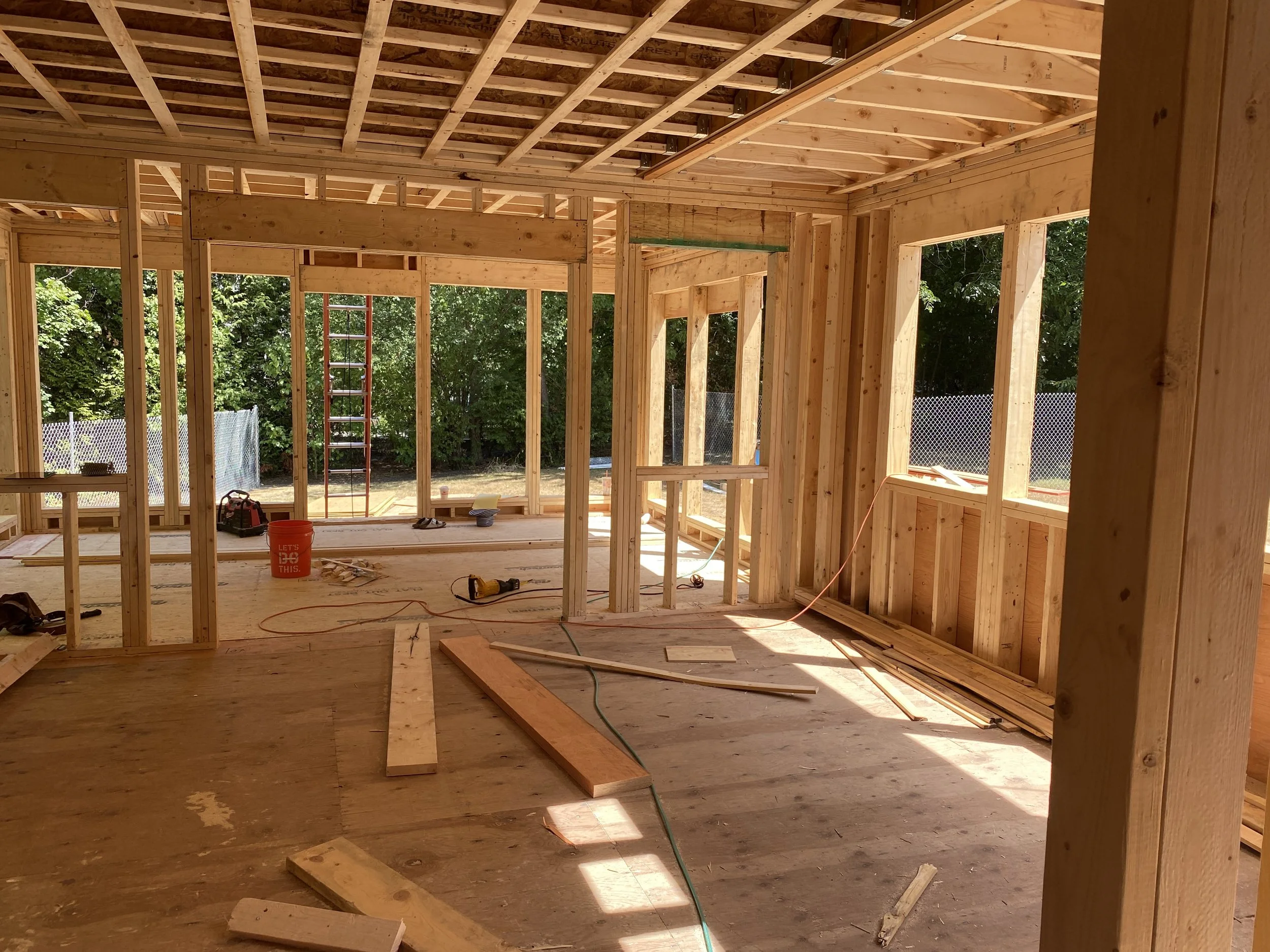
Construction is messy. Framing is up for a sun room and a kitchen and family room in Wellesley.
